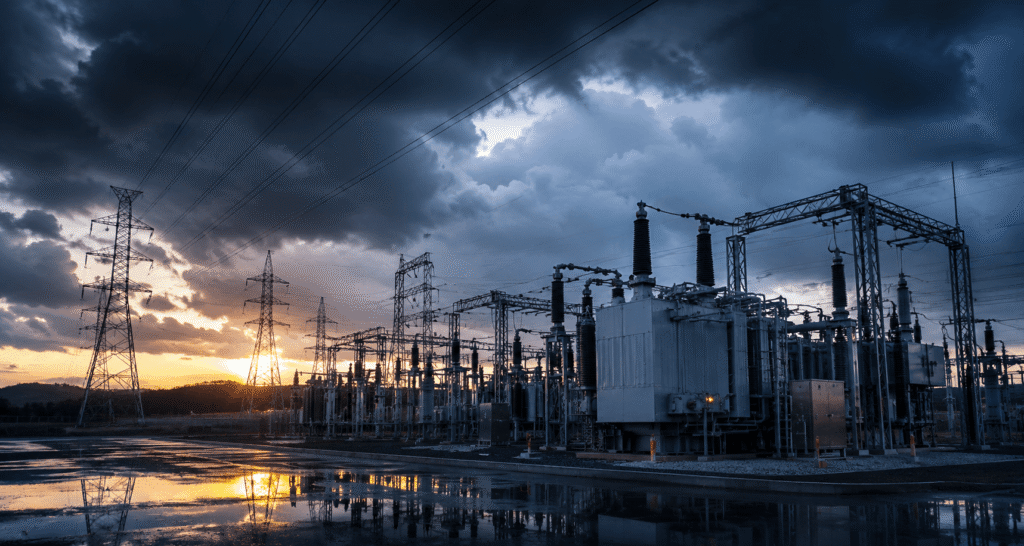
Extreme weather, climate variability, and evolving infrastructure demands are increasing the need for environmental qualification testing of critical industrial equipment.
1.0 CHANGING ENVIRONMENTAL CONDITIONS ARE RESHAPING INFRASTRUCTURE RELIABILITY REQUIREMENTS
For decades, much of the outdoor industrial infrastructure deployed throughout North America was designed around relatively stable environmental assumptions. Equipment qualification programs often relied upon historical climate patterns, fixed environmental envelopes, and standardized qualification approaches intended to demonstrate survivability under expected operating conditions.
That operating environment is changing. Outdoor infrastructure systems are increasingly exposed to broader thermal operating ranges, elevated ambient temperatures, greater humidity loading, more aggressive moisture exposure, and increasingly variable operating conditions.
Electric utilities are modernizing aging transmission and distribution systems while integrating renewable energy resources, battery energy storage systems, advanced grid automation, and distributed generation technologies into the power grid. The rapid growth of hyperscale data centers supporting artificial intelligence and cloud computing applications is creating unprecedented electrical demand growth across multiple regions of the United States.
Critical outdoor industrial equipment requiring environmental validation commonly includes:
- Switchgear
- Power Transformers
- Protective Relays
- SCADA Systems
- Telecommunications Infrastructure
- Battery Energy Storage Systems
- Emergency Backup Power Systems
- Rail Signaling Equipment
- Aerospace Ground Support Equipment
- Utility Communication Systems
- Transportation Control Systems
- Renewable Energy Infrastructure
- Industrial Automation Equipment
2.0 ENVIRONMENTAL TRENDS ARE INCREASING PRESSURE ON CRITICAL INFRASTRUCTURE
Environmental trend data increasingly supports the conclusion that infrastructure systems are operating under broader and more severe environmental exposure conditions than historically experienced.
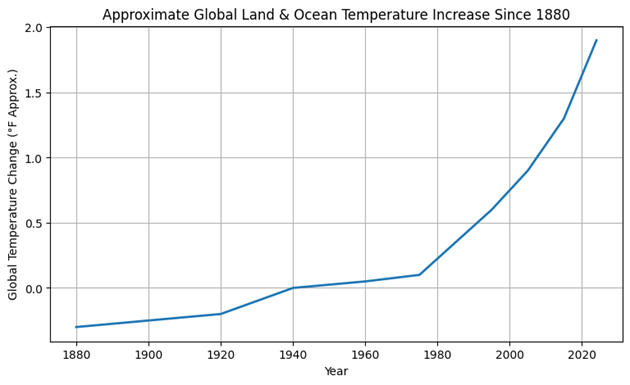
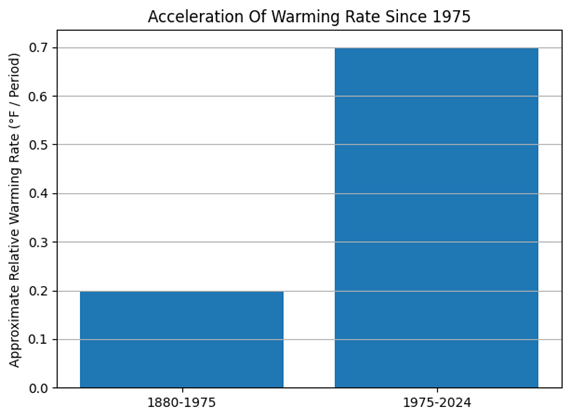
According to NOAA climate monitoring data, global land and ocean temperatures have increased approximately 2°F since the late nineteenth century, with warming accelerating substantially since approximately 1975. Current warming rates are estimated to be more than three times higher than historical long-term averages.
Additional climate monitoring organizations have documented measurable increases in:
- Frequency Of Extreme Heat Events
- Intensity Of Heavy Rainfall Events
- Flooding Conditions
- Coastal Moisture Exposure
- Thermal Variability
- Severe Weather Events
For industrial infrastructure operators, the engineering implication extends beyond increasing average temperature exposure. More significant is the increasing variability and unpredictability of environmental operating conditions.
3.0 CLIMATE VARIABILITY IS INTRODUCING NEW FAILURE MECHANISMS FOR OUTDOOR EQUIPMENT
The operational challenge associated with environmental exposure is not limited solely to isolated weather events. Modern infrastructure systems are increasingly subjected to prolonged and repeated environmental loading conditions capable of accelerating degradation mechanisms throughout the operational lifecycle of the equipment.
Elevated ambient temperatures continue to create substantial thermal management challenges for transformers, inverters, battery systems, telecommunications equipment, industrial controls, and cooling systems.
Sustained heat exposure accelerates degradation of polymers, elastomers, adhesives, coatings, cable insulation, and electronic components.
Low-temperature exposure creates separate operational concerns including seal degradation, cracking, reduced battery performance, lubrication changes, moisture ingress, and structural stress.
Thermal cycling remains one of the most significant long-term environmental stressors affecting outdoor industrial equipment. Repeated expansion and contraction associated with temperature transitions may contribute to solder fatigue, connector loosening, PCB stress, seal degradation, and material interface failure.
Humidity, moisture intrusion, flooding exposure, and salt fog conditions create additional reliability concerns capable of significantly reducing long-term infrastructure reliability.
4.0 INFRASTRUCTURE INDUSTRIES ARE FACING GROWING RELIABILITY PRESSURE
The electrical utility industry remains one of the largest users of environmentally qualified outdoor infrastructure equipment.
Critical utility infrastructure commonly requiring environmental qualification includes:
- Power Transformers
- Switchgear
- Protective Relays
- SCADA Systems
- Utility Communications Equipment
- Emergency Backup Power Systems
- Transmission Equipment
- Distribution Infrastructure
Additional industries facing increasing reliability pressure include:
- Data Centers And Digital Infrastructure
- Defense And Aerospace Systems
- Transportation And Rail Infrastructure
- Telecommunications Systems
- Petroleum And Pipeline Infrastructure
- Renewable Energy Infrastructure
- Battery Energy Storage Systems
Environmental failures affecting these systems may result in forced outages, transportation disruption, production losses, public safety exposure, operational interruption, and major financial consequences
5.0 ENVIRONMENTAL QUALIFICATION TESTING IS EVOLVING FROM COMPLIANCE TO RESILIENCY ENGINEERING
Historically, many qualification programs focused primarily on demonstrating compliance with standardized environmental requirements. Increasingly, however, manufacturers and infrastructure operators are recognizing that qualification testing must validate operational performance under realistic lifecycle environmental conditions rather than simply satisfying minimum pass/fail criteria.
Modern qualification programs increasingly emphasize:
- Lifecycle Reliability
- Accelerated Aging
- Failure Mechanism Identification
- Infrastructure Resiliency
- Combined Environmental Stress Exposure
- Application-Specific Environmental Tailoring
- Operational Validation
Common qualification methodologies now include high temperature testing, low temperature testing, thermal shock, thermal cycling, humidity testing, salt fog testing, water ingress testing, vibration testing, shock testing, powered operational testing, and combined environment testing.

6.0 INDUSTRY ENVIRONMENTAL QUALIFICATION STANDARDS AND TEST SPECIFICATIONS
Environmental qualification testing across critical infrastructure industries is typically governed by a combination of industry standards, military specifications, transportation requirements, utility qualification standards, telecommunications specifications, and application-specific engineering criteria. These standards establish environmental exposure profiles, operational performance expectations, durability requirements, and qualification methodologies intended to validate long-term equipment reliability under expected deployment conditions.
As environmental operating conditions become increasingly severe and infrastructure reliability expectations continue to rise, these qualification standards are becoming increasingly important within product development and infrastructure validation programs.
6.1 Rail Industry Environmental And Qualification Standards
Rail equipment is commonly exposed to vibration, mechanical shock, temperature extremes, humidity, moisture intrusion, dust, salt exposure, electrical transients, and outdoor operating conditions. Environmental qualification programs for rail applications frequently reference standards including:
- IEC 61373 / EN 61373 – Railway Applications, Rolling Stock Equipment, Shock And Vibration Testing
- EN 50155 – Railway Applications, Electronic Equipment Used On Rolling Stock
- EN 50125 – Railway Applications, Environmental Conditions For Equipment
- EN 50121 – Railway Applications, Electromagnetic Compatibility
- AREMA Communications & Signals Manual Requirements For Signal, Wayside, And Communications Equipment
- AAR, transit authority, and project-specific qualification requirements for rail signaling, control, power, and communications equipment
These standards are commonly used to validate rail electronics, signaling equipment, wayside cabinets, onboard systems, communications hardware, power electronics, batteries, and control equipment exposed to long-duration vibration, shock, temperature variation, humidity, and field operating conditions.
6.2 Power Generation And Utility Infrastructure Standards
Power generation and utility infrastructure equipment must often demonstrate environmental, seismic, thermal, electrical, and lifecycle reliability under demanding service conditions. Qualification requirements vary depending on whether the equipment is used in commercial nuclear, fossil, renewable, transmission, distribution, or grid automation applications. Common standards and specifications include:
- IEEE 323 – Standard For Qualifying Class 1E Equipment For Nuclear Power Generating Stations
- IEEE 344 – Seismic Qualification Of Equipment For Nuclear Power Generating Stations
- IEEE 383 – Qualification Of Electric Cables And Splices For Nuclear Facilities
- IEEE 693 – Recommended Practice For Seismic Design Of Substations Including Transmission & Distribution Equipment
- IEC 60068 – Environmental Testing Methods For Temperature, Humidity, Shock, Vibration, Salt Mist, And Related Environmental Exposures
- IEC 60721 – Classification Of Environmental Conditions
- NEMA, ANSI, UL, and utility-specific specifications for switchgear, controls, enclosures, relays, power electronics, and grid equipment
- 10 CFR 50 Appendix B and ASME NQA-1 quality requirements where nuclear safety-related or quality-affecting equipment is involved
These standards support qualification of transformers, switchgear, motor control centers, protective relays, control cabinets, inverters, battery energy storage systems, cables, sensors, emergency power systems, and other utility or power generation equipment.
6.3 Defense, Navy, Marine, And Aerospace Standards
Defense, Navy, Marine, and Aerospace systems are frequently required to operate in harsh environmental conditions including temperature extremes, thermal shock, humidity, salt fog, vibration, mechanical shock, altitude, sand and dust, rain, icing, explosive atmosphere, and electromagnetic environments. Common test standards and specifications include:
- MIL-STD-810 – Environmental Engineering Considerations And Laboratory Tests
- MIL-STD-461 – Electromagnetic Interference Characteristics Requirements For Equipment And Subsystems
- MIL-STD-464 – Electromagnetic Environmental Effects Requirements For Systems
- MIL-STD-167 – Mechanical Vibrations Of Shipboard Equipment
- MIL-S-901 / MIL-DTL-901 – High Impact Shock Testing For Shipboard Machinery, Equipment, And Systems
- MIL-STD-740 – Airborne And Structureborne Noise Measurements And Acceptance Criteria For Shipboard Equipment
- RTCA DO-160 – Environmental Conditions And Test Procedures For Airborne Equipment
- SAE, NASA, NAVSEA, FAA, and program-specific environmental qualification requirements
These standards are used to validate electronic systems, shipboard equipment, aerospace components, avionics, ground support equipment, power systems, propulsion support hardware, sensors, communications systems, and mission-critical defense equipment exposed to severe operating and transportation environments.
6.4 Telecommunications And Digital Infrastructure Standards
Telecommunications equipment must demonstrate reliable operation in central offices, outside plant installations, controlled shelters, rooftop sites, underground spaces, data centers, and remote field deployments. Equipment may be exposed to thermal cycling, humidity, vibration, seismic loading, dust, salt fog, electrical surges, lightning, and EMC conditions. Common standards and specifications include:
- Telcordia GR-63-CORE – NEBS Physical Protection Requirements, Including Thermal, Humidity, Fire, Earthquake, Vibration, Airborne Contaminants, And Acoustic Noise Criteria
- Telcordia GR-1089-CORE – EMC And Electrical Safety Requirements For Network Telecommunications Equipment
- ETSI EN 300 019 – Environmental Conditions And Environmental Tests For Telecommunications Equipment
- ETSI EN 300 132 – Power Supply Interface Requirements For Telecommunications Equipment
- IEC 60068 – Environmental Test Methods For Temperature, Humidity, Shock, Vibration, Salt Mist, And Other Exposure Conditions
- IEC 60529 / NEMA 250 – Ingress Protection And Enclosure Performance Requirements
- Carrier, data center, broadband, wireless, and infrastructure-owner qualification specifications
These standards support validation of network equipment, outside plant enclosures, broadband infrastructure, wireless base station equipment, power distribution systems, backup power systems, control electronics, and digital infrastructure hardware.
Across these industries, environmental qualification testing provides the technical basis for confirming that equipment can survive transportation, installation, storage, and long-term operation under realistic service conditions. The standards do not eliminate the need for engineering judgment. Instead, they provide a framework that can be tailored to the intended operating environment, equipment criticality, service life expectations, and consequences of failure.
7.0 RELIABILITY ENGINEERING AND RISK MITIGATION ARE DRIVING QUALIFICATION REQUIREMENTS
Environmental qualification testing is increasingly viewed as a strategic engineering function supporting infrastructure reliability and operational continuity.
Potential consequences associated with environmental failure may include:
- Forced Outages
- Unplanned Downtime
- Warranty Exposure
- Product Recall
- Infrastructure Damage
- Emergency Repair Costs
- Production Loss
- Regulatory Penalties
- Litigation
- Reputational Damage
For many industrial sectors, the financial consequences associated with field failure substantially exceed the cost of proactive environmental validation during product development.
8.0 ENVIRONMENTAL TESTING LABORATORIES ARE BECOMING STRATEGIC ENGINEERING PARTNERS
Environmental testing laboratories are increasingly functioning as engineering and validation partners supporting product development, reliability engineering, and infrastructure qualification programs.
Manufacturers increasingly seek testing partners capable of:
- Understanding Real-World Deployment Conditions
- Tailoring Qualification Programs
- Supporting Accelerated Development Schedules
- Collaborating During Product Development
- Identifying Reliability Risks
Modern qualification capabilities increasingly required for industrial infrastructure programs include thermal testing, climatic testing, vibration testing, EMC testing, water ingress testing, combined environment testing, large-scale equipment qualification, and powered operational testing.
9.0 CONCLUSION
Environmental operating conditions affecting outdoor industrial infrastructure are becoming increasingly severe, variable, and operationally demanding.
Utilities, data centers, transportation systems, telecommunications providers, defense organizations, aerospace companies, and industrial manufacturers are all facing growing pressure to ensure outdoor infrastructure systems can withstand broader and more aggressive environmental exposure conditions throughout extended operational lifecycles.
Environmental qualification testing has evolved from a traditional compliance requirement into a strategic engineering discipline supporting infrastructure resiliency, operational continuity, lifecycle reliability, product validation, risk mitigation, and long-term performance confidence.
Organizations capable of validating equipment performance under realistic environmental operating conditions are better positioned to reduce operational risk, improve infrastructure reliability, minimize lifecycle cost, and strengthen long-term infrastructure resiliency.
REFERENCES
Climate & Environmental Trend Sources
- NOAA Climate Publications: NOAA Climate
- NOAA Climate Maps & Data: NOAA Climate Maps & Data
- NOAA Reports & Science Assessments: NOAA Climate Reports
- IPCC Assessment Reports: IPCC Reports
- IPCC AR6 Synthesis Report: IPCC Sixth Assessment Report
IEC Standards
- IEC 60068 Environmental Testing: IEC 60068 Environmental Testing
- IEC 60529 Degrees of Protection (IP Code): https://webstore.iec.ch/publication/2452
- IEC 60721 Classification of Environmental Conditions: https://webstore.iec.ch/publication/607
- IEC 61373 Railway Shock & Vibration: https://webstore.iec.ch/publication/2782
Railway Standards
- EN 50155 Railway Electronics:
https://standards.iteh.ai/catalog/standards/clc/0d46d0f1-b0c8-4bdb-8e0d-3fd4b86a6d65/en-50155-2021 - EN 50125 Environmental Conditions for Railway Equipment:
https://standards.iteh.ai/catalog/standards/clc/fc0a50df-75cf-42a6-8c8f-20e55f5f16f0/en-50125-1-2014 - EN 50121 Railway EMC Standards:
https://standards.iteh.ai/catalog/standards/clc/72c8dcf7-783f-4b7d-92c8-4fd7be3c7eca/en-50121-1-2017
IEEE Standards
- IEEE 323 Nuclear Qualification:
https://standards.ieee.org/standard/323-2003.html - IEEE 344 Seismic Qualification:
https://standards.ieee.org/standard/344-2013.html - IEEE 383 Nuclear Cable Qualification:
https://standards.ieee.org/standard/383-2015.html - IEEE 693 Seismic Design of Substations:
https://standards.ieee.org/standard/693-2018.html - IEEE Standards Portal:
https://standards.ieee.org/
Military Standards
- MIL-STD-810 Environmental Engineering:
https://quicksearch.dla.mil/qsDocDetails.aspx?ident_number=36095 - MIL-STD-461 EMI Requirements:
https://quicksearch.dla.mil/qsDocDetails.aspx?ident_number=35747 - MIL-STD-464 Electromagnetic Environmental Effects:
https://quicksearch.dla.mil/qsDocDetails.aspx?ident_number=35927 - MIL-STD-167 Shipboard Vibration:
https://quicksearch.dla.mil/qsDocDetails.aspx?ident_number=36001 - MIL-DTL-901 High Impact Shock:
https://quicksearch.dla.mil/qsDocDetails.aspx?ident_number=36065
Aerospace Standards
- RTCA DO-160 Environmental Conditions for Airborne Equipment:
https://rtca.org/store/do-160g-environmental-conditions-and-test-procedures-for-airborne-equipment/
Telecommunications / NEBS
- Telcordia GR-63-CORE NEBS Physical Protection:
https://telecom-info.telcordia.com/site-cgi/ido/docs.cgi?ID=SEARCH&db=tc&hd=where%28gr63%29 - Telcordia GR-1089-CORE EMC & Electrical Safety:
https://telecom-info.telcordia.com/site-cgi/ido/docs.cgi?ID=SEARCH&db=tc&hd=where%28gr1089%29 - ETSI EN 300 019 Environmental Conditions & Tests:
https://www.etsi.org/deliver/etsi_en/300000_300099/30001901/